Astounding scenery, indulgent food, mysterious banking systems: Switzerland is truly a land of wonder. And something else that makes the land of Heidi and hyper-efficient trains particularly intriguing? Despite their love of cheese and chocolate, the Swiss have the longest life expectancy of any population in Europe. The average Swiss citizen lives to the ripe old age of 84.2, according to a recent report.
Meanwhile, we Britons have the lowest life expectancy in western Europe, at an average of 80.9. So what exactly are the Swiss doing so right that we’re doing so wrong? I spoke with a Swiss national, plus an ex-pat Briton who has been living in Switzerland for the past 19 years, to find out exactly why they live so much longer than we do.
Adopt healthy eating habits in children
A healthy approach to life and personal responsibility is instilled in Swiss children from an early age. “When I first moved here from London in 2005 I was amazed to discover that all children walk to school by themselves from the age of seven onwards,” says Diccon Bewes, an author of several books on the country. “Some ex-pat Britons would walk their kids to school but the principals would reprimand them for it as they thought it would set a bad example to others. They want children to be independent and to get used to walking every day.”
The same principles apply to lunch. “Swiss schools don’t provide lunch – they all go home to eat,” says Bewes. “Again, this encourages personal responsibility. The family must choose how to feed their children, not the school or the government. Most Swiss families will get together at lunchtime and eat freshly prepared meals. The kids are not getting chicken nuggets and chips in school canteens.”
Ramona Johann, a 40-year-old mother of two from Lucerne in central Switzerland, says the approach to child nutrition has changed since she was younger. “My parents and grandparents taught me very little about healthy eating and the focus was on traditional, calorie-bomb Swiss food like raclette, roast meats and cakes,” she says. “But these days parents are more aware of setting the right example. In my house we try not to have any sugar other than fruit. Of course on special occasions we will have deserts. But many Swiss people prefer cheese after a meal in place of sugary puddings.”
Hike religiously
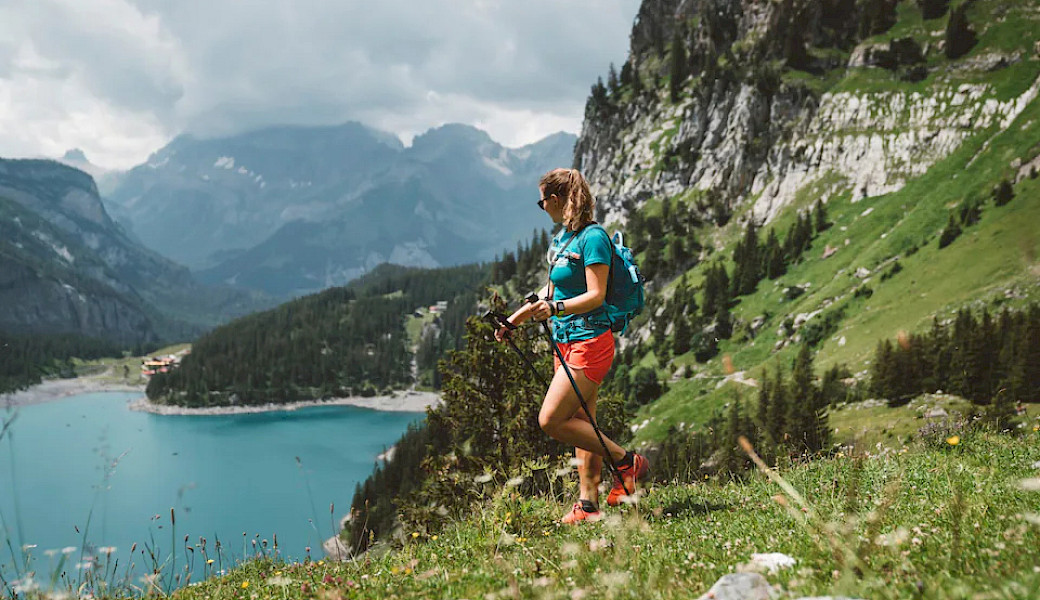
“Exercise is very important for the Swiss,” says Johann. “We have the perfect environment for it, with very fresh air and clean water. It is free and safe to swim in the lakes in summer or walk in the mountains all year round.” But it goes beyond mere convenience: the need to be outdoors is hard-wired into Swiss culture. “Kids are taught to ski as soon as they can walk,” says Bewes. “Hiking is the national pastime.
Hiking paths are as widespread as the national road network, that’s how important it is, and they are managed by volunteers. On a Sunday you will see thousands of people of all ages heading out for a hike. There is a sort of peer pressure among the Swiss. You are expected to be outside, getting fresh air and being active. The train network is built into the mountains which means it is easy to get out of the city for a hike every weekend. Even my 80-something in-laws hike religiously.”
A strong work-life balance
“Mental health is prioritised in Swiss culture,” says Bewes. “Shops are shut on Sunday to allow people to be outside taking care of themselves. Also, most people’s working hours are strictly controlled in order to reserve time for relaxation with friends and family. You will never have to answer an email from your boss at 10pm on a Saturday night. The pace of life is much slower than in the UK. I live in Bern and can walk everywhere because everything is easily accessible. Many people don’t bother owning a car because the public transport is so good.”
A little bit of chocolate – and a lot of museli
“I believe we have the best cheese, chocolate and bread in the world,” says Ramona Johann. “But our secret is moderation. The national food is heavy, like fondu, sausages, and greasy potato rostis. But these are special occasion foods. Day to day we tend to eat lighter, fresher foods. Cheeses such as Emmental and Gruyère are probably eaten in small amounts most days, often for breakfast. But it’s not unhealthy if you’re only having a small amount.”
Moderation is embedded in the national psyche, observes Diccon Bewes. “In politics, finance and food, the Swiss attitude is ‘never go over the top.’ Almost everyone in Switzerland goes home for lunch so that tends to be the biggest meal of the day. In the evenings, they will eat something light such as a bowl of Bircher muesli.” The famous Swiss dish was invented by physician Maximillian Bircher-Benner in 1900 to feed to patients at his Zurich sanatorium. He combined oats soaked overnight in milk with yoghurt, a whole grated apple (pips and core included) plus mixed nuts and seasonal fruit. “It’s not just a breakfast food here,” says Bewes. “It is sold in small pots in all food shops and eaten at any time of day. It is nothing like the dusty muesli that is sold in boxes in the UK.”
Unlike most other European countries, Switzerland has been slow to embrace fast food deliveries and remains relatively indifferent to ready meals. “When I first moved here there was only one chiller cabinet in the whole supermarket containing ready meals,” says Bewes. “It has since expanded to a single aisle. There is a strong focus on local, seasonal food. Restaurants have to put the origin of foods on their menus so people can make an informed decision.
Generally speaking, you don’t see many noticeably overweight people in the street in Switzerland.” The attitude towards weight can sometimes be intimidating, says Johann, who managed to lose the weight she gained after pregnancy by cutting out white sugar and walking 10,000 steps per day. “Being overweight is widely frowned upon in Swiss society,” she says. “As soon as you are 10kg over your usual weight, people will start to whisper about you. It can sometimes seem superficial: if you don’t fit the norm for a healthy body shape you stand out.”
A world class health system
Everyone in Switzerland must have health insurance cover by law. Private insurance firms must offer basic cover to anyone who applies and are forbidden from asking questions about lifestyle or pre-existing conditions. Citizens can ‘top-up’ their cover by paying for extra services. “It’s a system that works well for most,” says Bewes, who has received cancer treatment in Switzerland for the past three years. “I can book a GP appointment online and see someone within a few days. For more urgent problems I can call up and they will fit me in on the same day. The hospitals are of a very high standard and the treatment you receive is incredible. The downside is that it is expensive.”
Those who are unemployed or on a low income have their insurance costs covered by the government. But, says Johann, some fall into a grey area. “I know many people earning too much to qualify for government help but not enough to afford the basic premium. They can be blacklisted if they have outstanding healthcare bills they can’t pay. The insurance system needs to be tweaked but for most people, the healthcare in Switzerland is of a very high standard.”
Bewes says the Swiss culture of personal responsibility helps lessen the strain on the health service. “The government tries not to interfere in people’s lifestyle choices,” he says. “But there is a common understanding that looking after yourself is your own responsibility and that exercise and healthy eating is in your own interests.”